
Resources
We publish research, tools, and lessons learned to help healthcare and legal organizations build and operate medical-legal partnerships and to help funders and policymakers advance medical-legal partnership activities. You can search those resources in the library below.
The library also links to journal articles, authored both by National Center for Medical-Legal Partnership staff and MLP practitioners and researchers from the field, that highlight ways medical-legal partnerships have improved patient health and well-being, the healthcare workforce, and healthcare delivery. A list of these articles with summaries are also available on the Peer-Reviewed Research page.
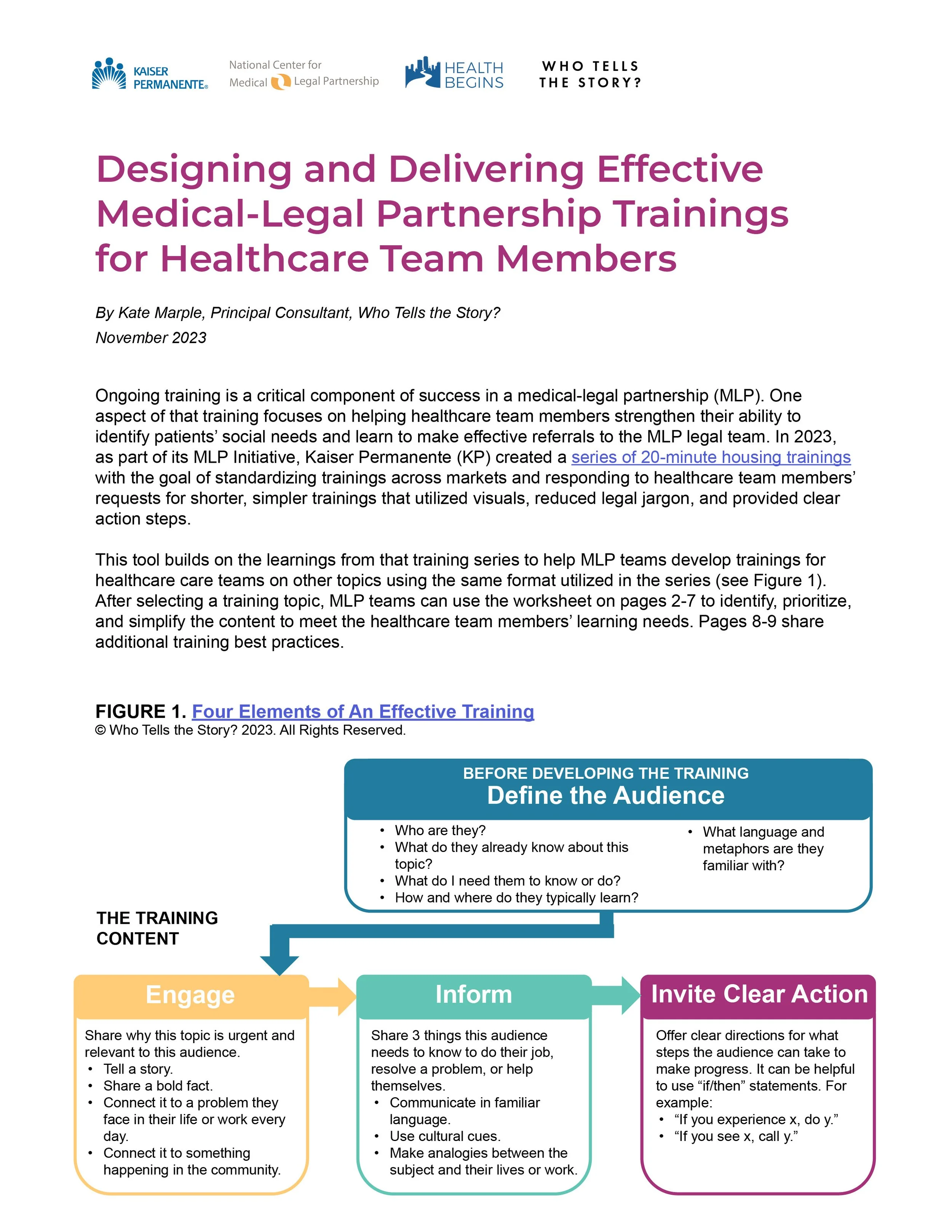
MLP Housing Trainings for Healthcare Teams
As part of regular medical-legal partnership practice, legal team members train healthcare team members’ about specific health-related legal topics to increase and improve referrals to medical-legal partnership legal partners. A series of housing trainings for healthcare providers were created for the Kaiser Permanente (KP) Medical-Legal Partnership Initiative. While initially created to train KP front-line healthcare staff, these trainings can be easily adapted and used by any MLP.
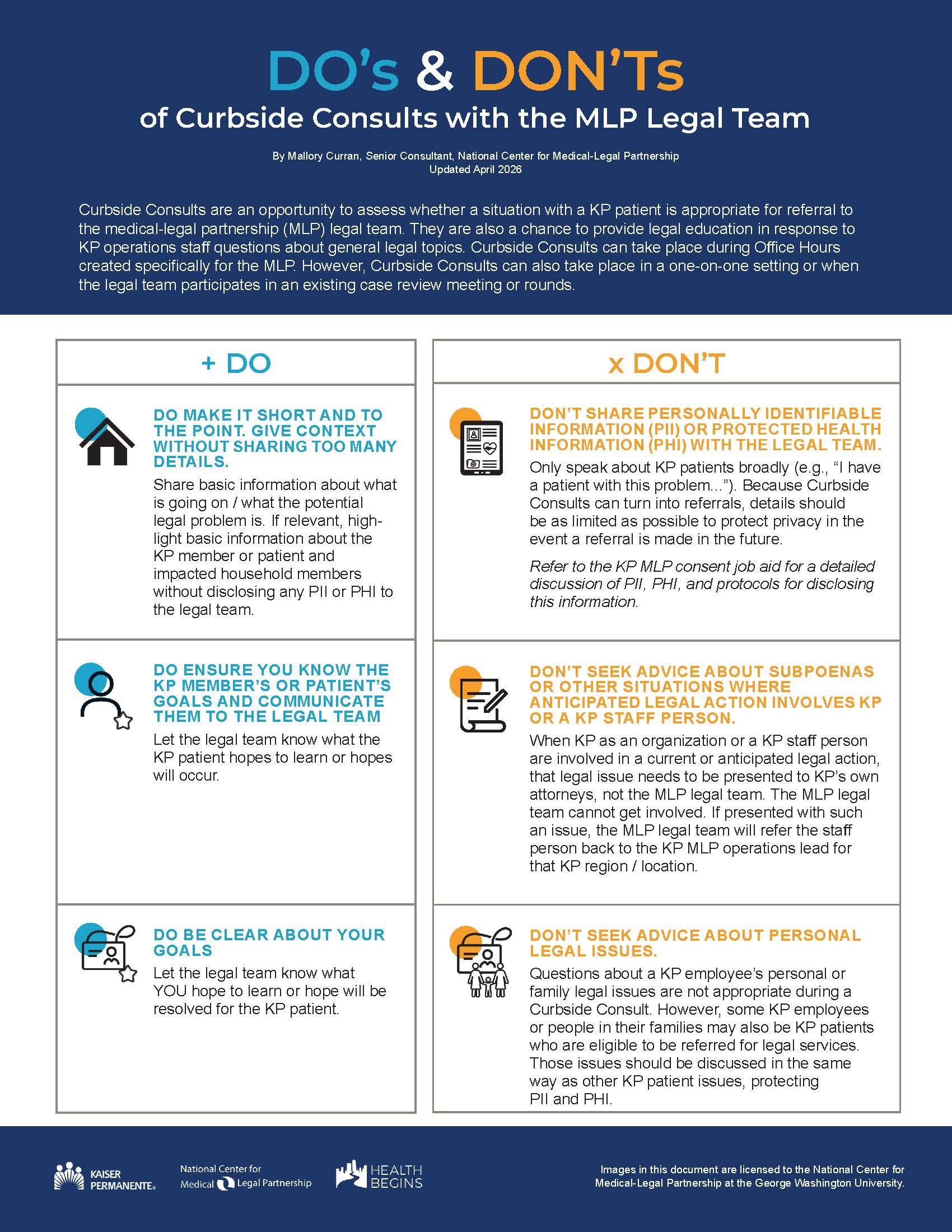
Do’s & Don’ts of MLP Curbside Consults
This job aid can help front-line healthcare staff understand the “do’s and don’ts” of medical-legal partnership Curbside Consults with legal services providers, including what types of questions can be asked and what type of patient information can be shared. It was created as part of the Kaiser Permanente (KP) Medical-Legal Partnership Initiative.

A Patient’s MLP Legal Journey
This training and job aid help healthcare staff understand what happens after they refer a patient to a medical-legal partnership legal team. It shares the steps a legal team takes when working with a patient. It includes the types of legal interventions a lawyer might provide and how long it can take to resolve an issue. It was created as part of the Kaiser Permanente (KP) Medical-Legal Partnership Initiative.
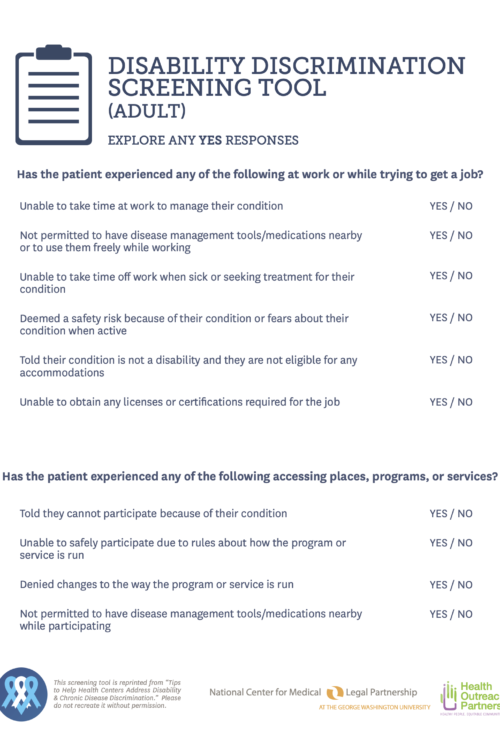
Screening Tool for Disability Discrimination
Two new screening tools help healthcare providers determine if a patient is experiencing discrimination based on a disability or chronic disease. There is one tool for adults and another for children and young adults (including those attending college).

Tips to Help Health Centers Address Disability & Chronic Disease Discrimination
This resource contains tips, electronic resources, and two brand new screening tools for health centers to help their patients with disabilities and chronic diseases. It covers topics such as employment, immigration, education, and Long COVID.
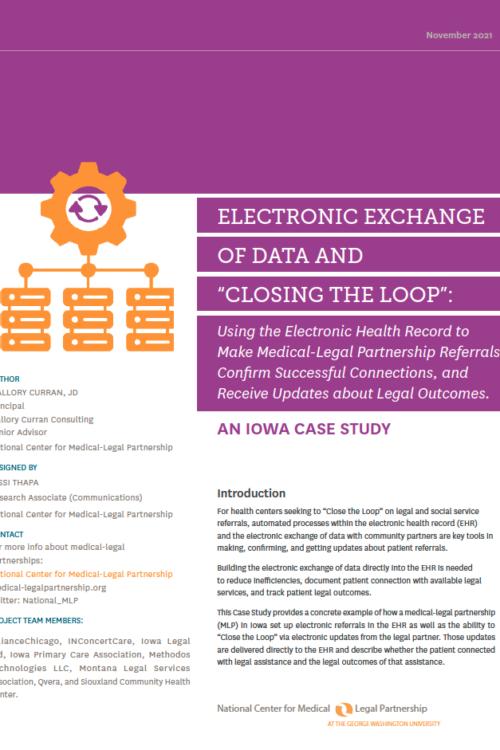
Electronic Exchange of Data and “Closing The Loop”: An Iowa Case Study
This case study provides a concrete example of how a medical-legal partnership (MLP) in Iowa set up electronic referrals in the electronic health record (EHR) as well as the ability to “close the loop” via electronic updates from the legal partner. Those updates are delivered directly to the EHR and describe whether the patient is connected with legal assistance and the legal outcomes of that assistance.