
16 Civil Legal Aid Leaders Selected for Second Year of Health Care Fellowship, Led by NCMLP and NLADA
Thanks to generous support from the Public Welfare Foundation, the National Center for Medical-Legal Partnership at the George Washington University (NCMLP) and the National Legal Aid and Defender Association (NLADA) kicked off the second year of their Where Health Meets Justice Fellowship yesterday, designed to build healthcare expertise in the civil legal aid community. Sixteen senior level staff from civil legal aid agencies in 13 states and the District of Columbia met in Washington, D.C. to participate in workshops with healthcare experts.
“Civil legal needs related to housing, domestic violence and public benefits are inextricably linked to the health and well-being of low-income communities,” said Camille Holmes, Director for Leadership and Racial Equality at NLADA. “For decades, civil legal aid offices have worked to improve housing conditions, ensure safety at home and appeal public benefit denials. But this work traditionally occurs in a silo separate from what health care does to treat the same people and the same problems. This fellowship aims to remedy that.”
During the 10-month fellowship, Fellows will be guided by a faculty of national experts in healthcare administration, policy, research and economics, and participate in activities designed to deepen their understanding of healthcare organization, financing and priorities. Fellows will learn to frame legal services in a healthcare context, build strong healthcare alliances, and use population health data effectively. The fellowship will culminate in a project with a local healthcare entity.
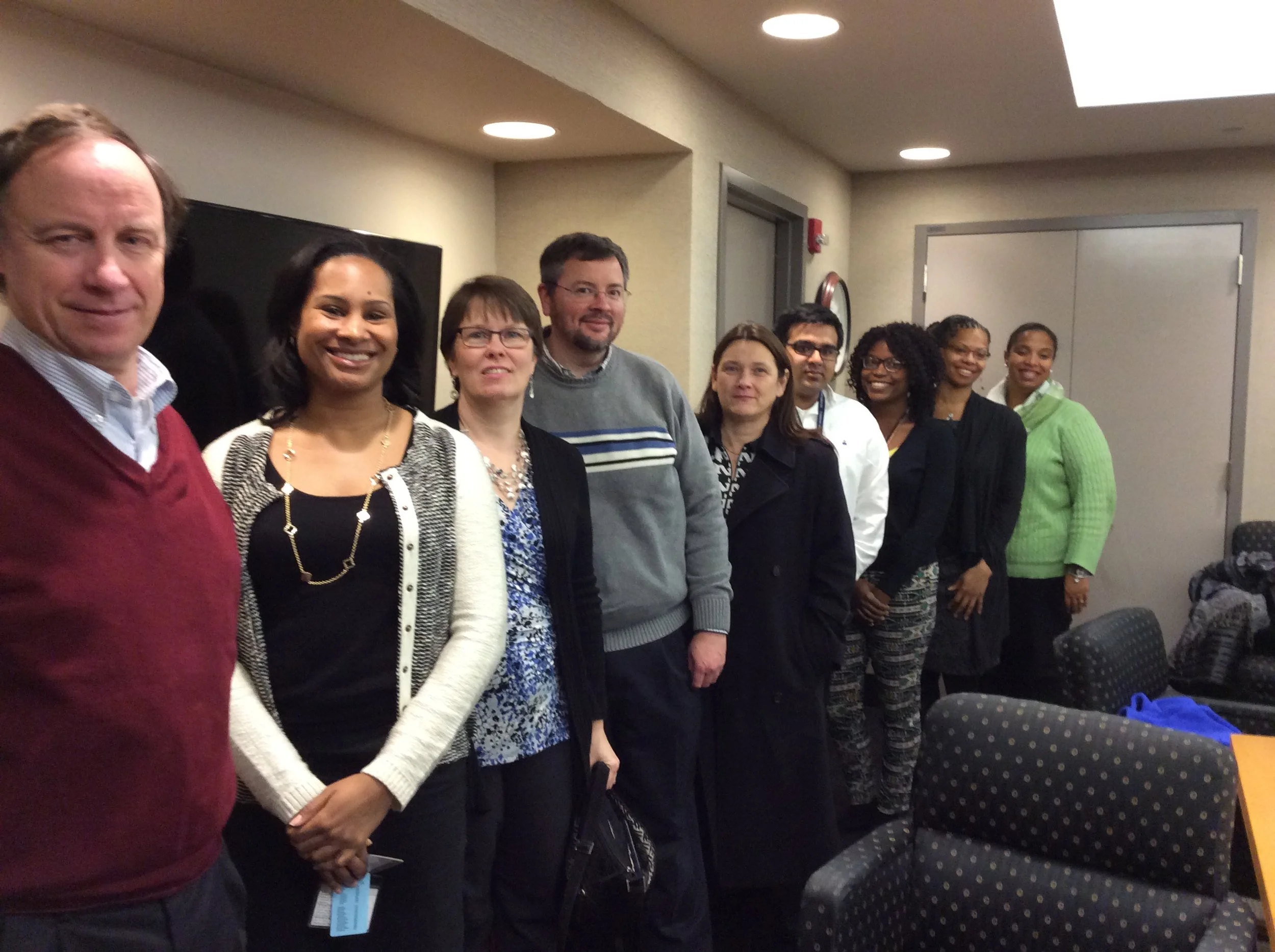
The Association of American Medical College’s Dr. Malika Fair (second from left) with Where Health Meets Justice Fellows and NCMLP staff after a tour of the GW emergency department and discussion of the healthcare landscape.
“More and more, health care recognizes the value of working alongside other professions to deliver quality health care to their patients and communities,” said Ellen Lawton, co-Principal Investigator of NCMLP. “The civil legal aid community has critical expertise and skills to contribute to patient health and policy change, but it must transform the way it collects data and delivers care in order to help more people. Working with healthcare partners is a critical step, and this fellowship will help build that expertise in these agencies from the top down.”
2014 Where Health Meets Justice Report
2015 Where Health Meets Justice Fellows
Wendy Ascher, Managing Attorney/Director of Intake, Southern Arizona Legal Aid Inc.
Eric Avildsen, Executive Director, Vermont Legal Aid Inc.
Jim Barrett, Executive Director, Pisgah Legal Services (North Carolina)
Laura Berumen, Program Director, California Rural Legal Assistance, Rural Health Disparities Program
Lisa Brody, Managing Attorney/Project Director, Bay Area Legal Services Inc. (Florida)
Robert Bush, Senior Staff Attorney, Georgia Legal Services Program, Inc.
Peggy Earisman, Director, Manhattan Legal Services
Annette Farnan, Interim Executive Director, Legal Aid of Nebraska
Gary Housepian, Executive Director, Legal Aid Society of Middle Tennessee and the Cumberlands
Michelle Marie Kezirian, Senior Director of Litigation, Bet Tzedek Legal Services (California)
Steven McGarrity, Associate Director, Community Legal Aid Services, Inc. (Ohio)
Jennifer Mezey, Supervising Attorney, Legal Aid Society of the District of Columbia
Elizabeth Soulè, Executive Director, MetroWest Legal Services in Framingham (Massachusetts)
Laura Tuggle, Executive Director, Southeast Louisiana Legal Services
Monica Vigues-Pitan, Advocacy Director, Legal Services of Greater Miami, Inc.
Thomas Yates, Executive Director, AIDS Legal Council of Chicago