
Resources
We publish research, tools, and lessons learned to help healthcare and legal organizations build and operate medical-legal partnerships and to help funders and policymakers advance medical-legal partnership activities. You can search those resources in the library below.
The library also links to journal articles, authored both by National Center for Medical-Legal Partnership staff and MLP practitioners and researchers from the field, that highlight ways medical-legal partnerships have improved patient health and well-being, the healthcare workforce, and healthcare delivery. A list of these articles with summaries are also available on the Peer-Reviewed Research page.
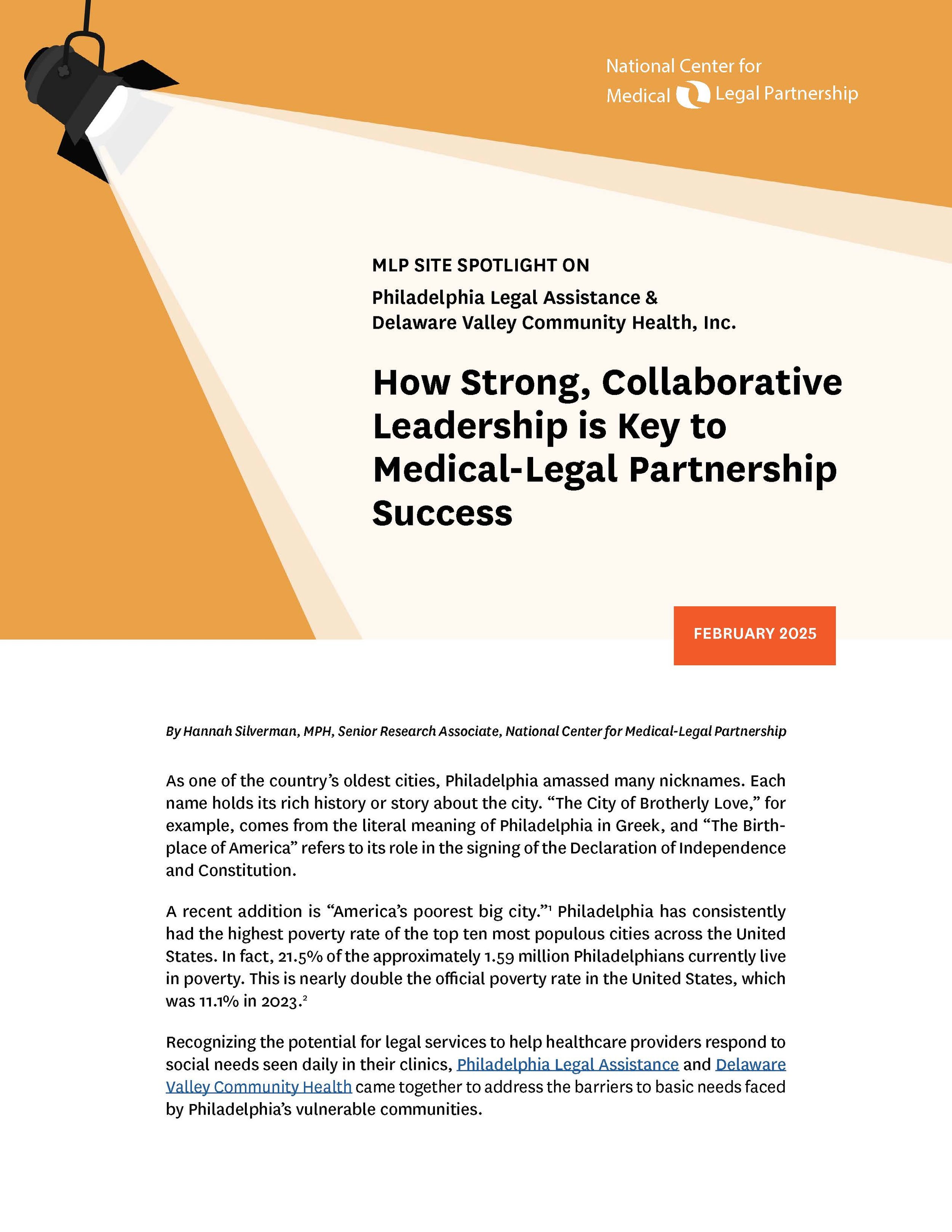
How Strong, Collaborative Leadership is Key to MLP Success: MLP Spotlight on Philadelphia Legal Assistance & Delaware Valley Community Health
This site profile features the work of the medical-legal partnership established by Philadelphia Legal Assistance and Delaware Community Health, Inc. It describes the demographics of Philadelphia County, Pennsylvania, where the MLP is situated and who is served by the partnership. The profile also details how the partners meet the eight core components of an MLP established by the National Center for Medical-Legal Partnership and shares steps the partners have taken to ensure success.
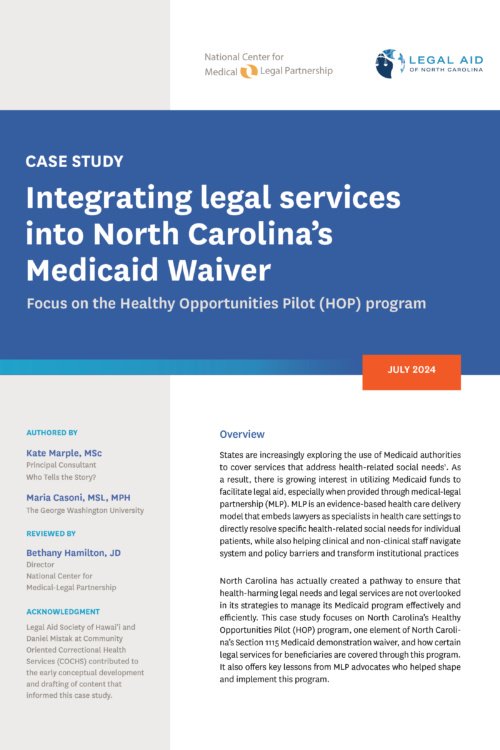
Integrating Legal Services into North Carolina’s Medicaid Waiver
This case study focuses on North Carolina’s Healthy Opportunities Pilot (HOP) program, one element of North Carolina’s Section 1115 Medicaid demonstration waiver, and how certain legal services for beneficiaries are covered through this program. It also offers key lessons from medical-legal partnership (MLP) advocates who helped shape and implement this program.
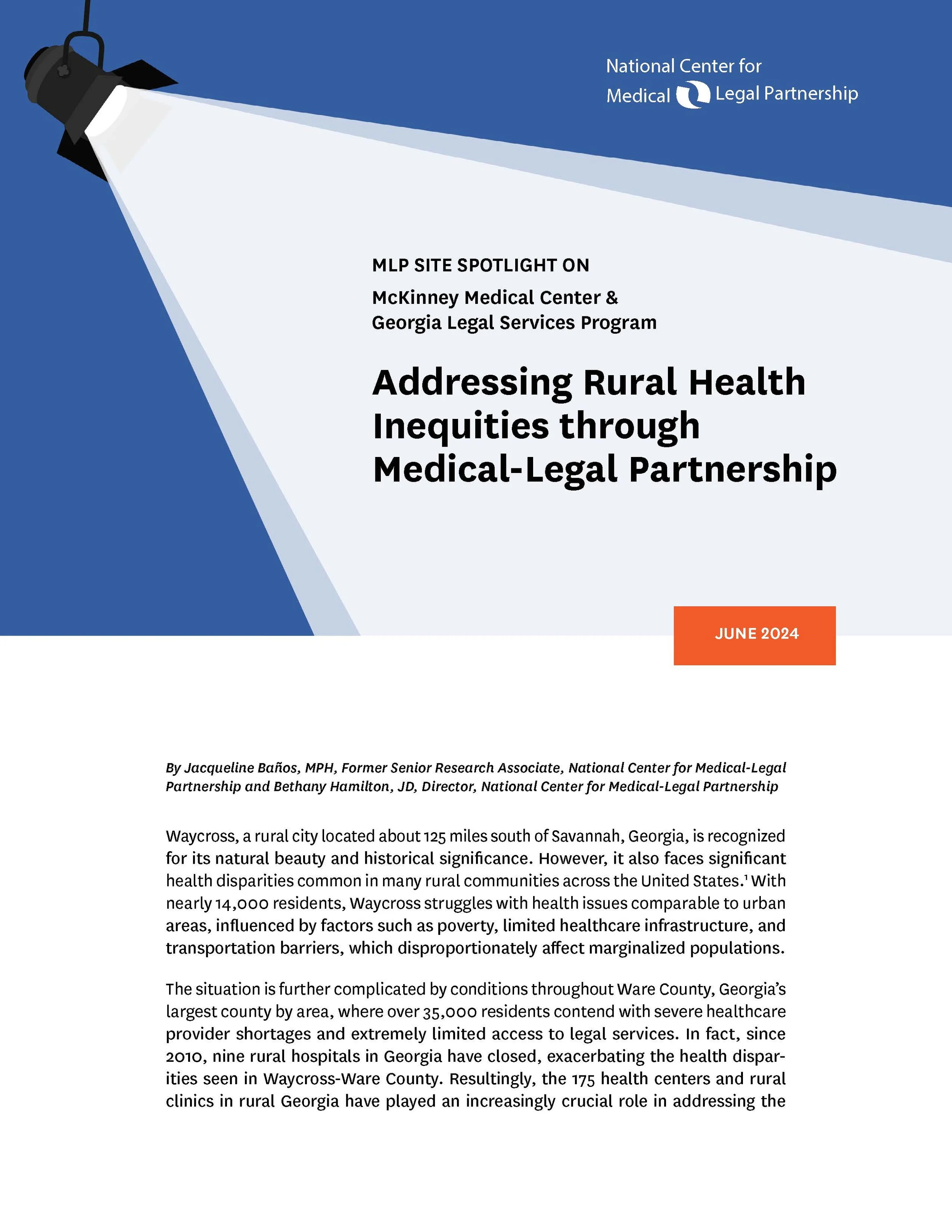
Addressing Rural Health Inequities through Medical-Legal Partnership: MLP Spotlight on McKinney Medical Center & Georgia Legal Services Program
This site profile features the work of the medical-legal partnership established by McKinney Medical Center and Georgia Legal Services Program. It describes the demographics of Waycross-Wayne County, Georgia, where the MLP is situated and who is served by the partnership. The profile also details how the partners meet the eight core components of an MLP established by the National Center for Medical-Legal Partnership.
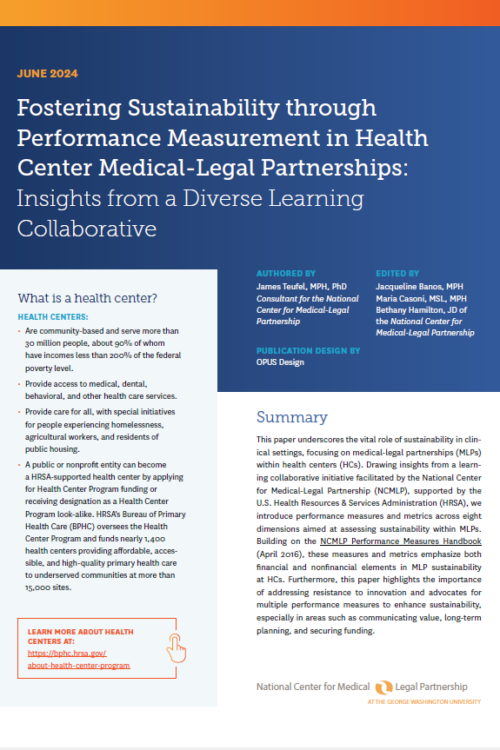
Fostering Sustainability through Performance Measurement in Health Center Medical-Legal Partnerships
This issue brief highlights the crucial role of sustainability for medical-legal partnerships (MLP), focusing on programs situated in health centers. It presents performance measures across eight dimensions to assess MLP sustainability. Building on the NCMLP Performance Measures Handbook (April 2016), these measures cover financial and non-financial aspects. They address resistance to innovation and emphasize the importance of communicating value, long-term planning, and securing funding.
Addressing Unmet Social Needs and Social Risks — A Qualitative Interview-Based Assessment of Parent Reported Outcomes and Impact from a Medical-Legal Partnership
This article published in the Journal of Law, Medicine & Ethics reports outcomes from one medical-legal partnership from the perspective of patient-clients. Patients who received legal services had improvements in physical health, including asthma control, and mental health benefits, such as reduced anxiety. MLP involvement also reduced caregiver stress, enabling parents to focus on their child’s health.
Designing and Developing a Medical-Legal Partnership to Address Cancer Patients' Health-Harming Legal Needs
The Georgetown University's Cancer Legal Assistance and Well-being Project launched in 2020 as a medical-legal partnership that works with health care providers at a Washington, D.C. safety-net hospital to treat the health-harming legal needs of historically and intentionally marginalized patients with cancer. Preliminary data support the estimate that the project has secured over $700,000 for patients in the form of insurance coverage, disability benefits and other income supports, paid leave, and debt relief. The findings were published in the Journal of Health Care for the Poor and Underserved.