
Resources
We publish research, tools, and lessons learned to help healthcare and legal organizations build and operate medical-legal partnerships and to help funders and policymakers advance medical-legal partnership activities. You can search those resources in the library below.
The library also links to journal articles, authored both by National Center for Medical-Legal Partnership staff and MLP practitioners and researchers from the field, that highlight ways medical-legal partnerships have improved patient health and well-being, the healthcare workforce, and healthcare delivery. A list of these articles with summaries are also available on the Peer-Reviewed Research page.
Financing Medical-Legal Partnerships: View from the Field
To date, nearly 350 health organizations nationwide have implemented medical-legal partnerships (MLPs). This fact sheet draws on national survey data from these organizations and their partnering legal organizations to describe programs’ average budgets as well as a variety of health, legal, and philanthropic funding streams that currently fund MLPs. It also discusses how MLPs are adapting to meet their funding challenges and highlights examples of programs implementing innovative Medicaid financing models to pay for MLP services.
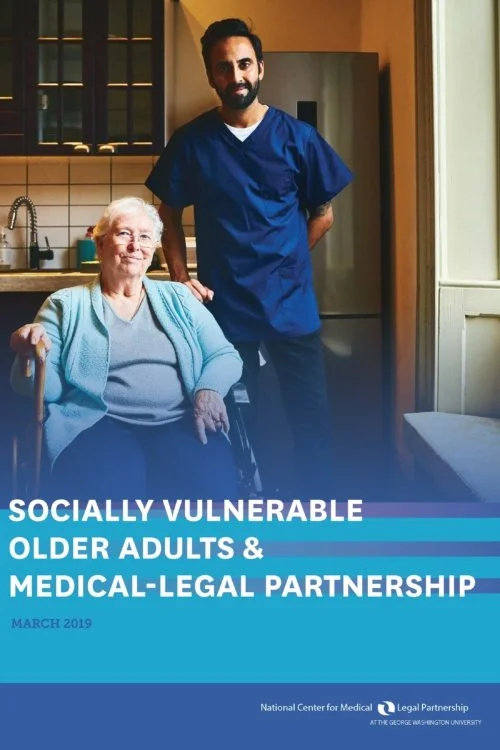
Socially Vulnerable Older Adults and Medical-Legal Partnership
This issue brief describes the pressing legal needs facing older adults and ways that coordinating healthcare, legal, and social services can improve their care and well-being. The report details three medical-legal partnership programs serving older adults and their impact on preventing homelessness, improving financial stability, and more.
Complex Care Health Settings and Medical-Legal Partnerships
This fact sheet describes describes five complex care settings that have integrated medical-legal partnership services into care delivery. It also features data on the ways these partnerships have demonstrated initial success in improving both physical and mental health conditions as well as stabilizing income and housing for patients with complex conditions. Data also shows how MLPs curb costly overuse of healthcare services by addressing the root causes of patients’ problems.
Homelessness, Health, and Medical-Legal Partnerships
This fact sheet describes common social and legal needs that affect the health of homeless individuals and ways integrated legal services can help meet those needs. It includes data from a study in Connecticut and New York City highlighting the housing and mental health benefits of MLP services for homeless veterans.
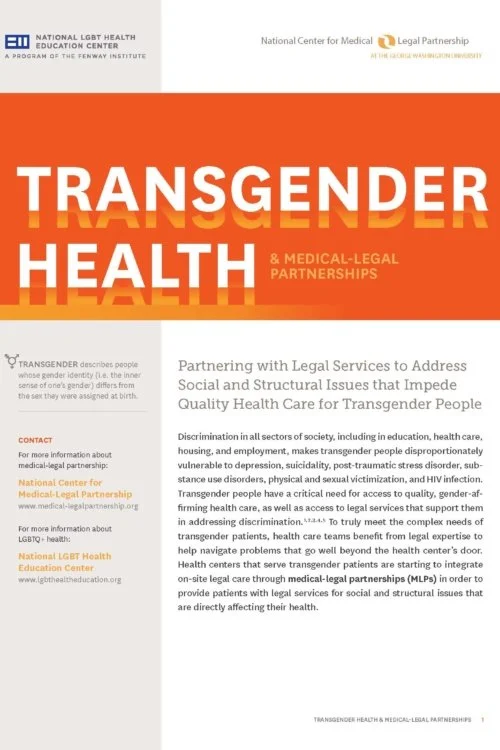
Transgender Health and Medical-Legal Partnerships
This fact sheet describes common social and legal needs that affect the health of transgender individuals and ways integrated legal services can help meet those needs. It examines medical-legal partnership programs at three healthcare organizations and how they operate, and it shares stories of people benefiting from medical-legal partnership services.
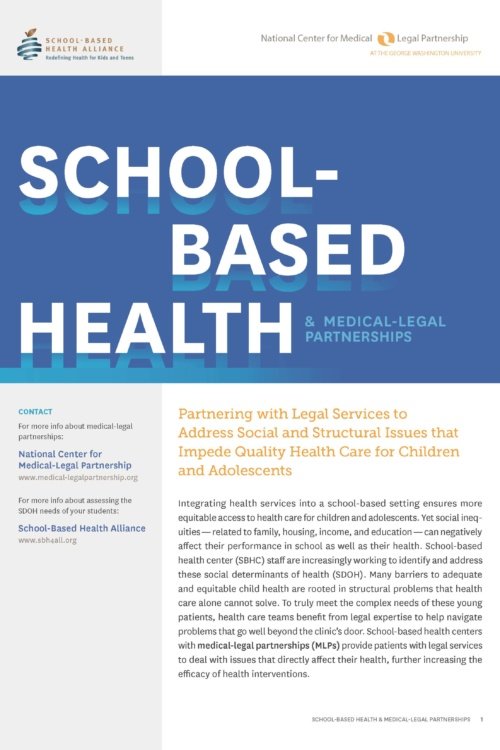
School-Based Health and Medical-Legal Partnerships
This fact sheet describes common social and legal needs that affect the health of youth and ways integrated legal services can help meet those needs. It examines medical-legal partnership programs at two school-based health centers and how they operate, and it shares stories of students benefiting from medical-legal partnership services.