
Resources
We publish research, tools, and lessons learned to help healthcare and legal organizations build and operate medical-legal partnerships and to help funders and policymakers advance medical-legal partnership activities. You can search those resources in the library below.
The library also links to journal articles, authored both by National Center for Medical-Legal Partnership staff and MLP practitioners and researchers from the field, that highlight ways medical-legal partnerships have improved patient health and well-being, the healthcare workforce, and healthcare delivery. A list of these articles with summaries are also available on the Peer-Reviewed Research page.
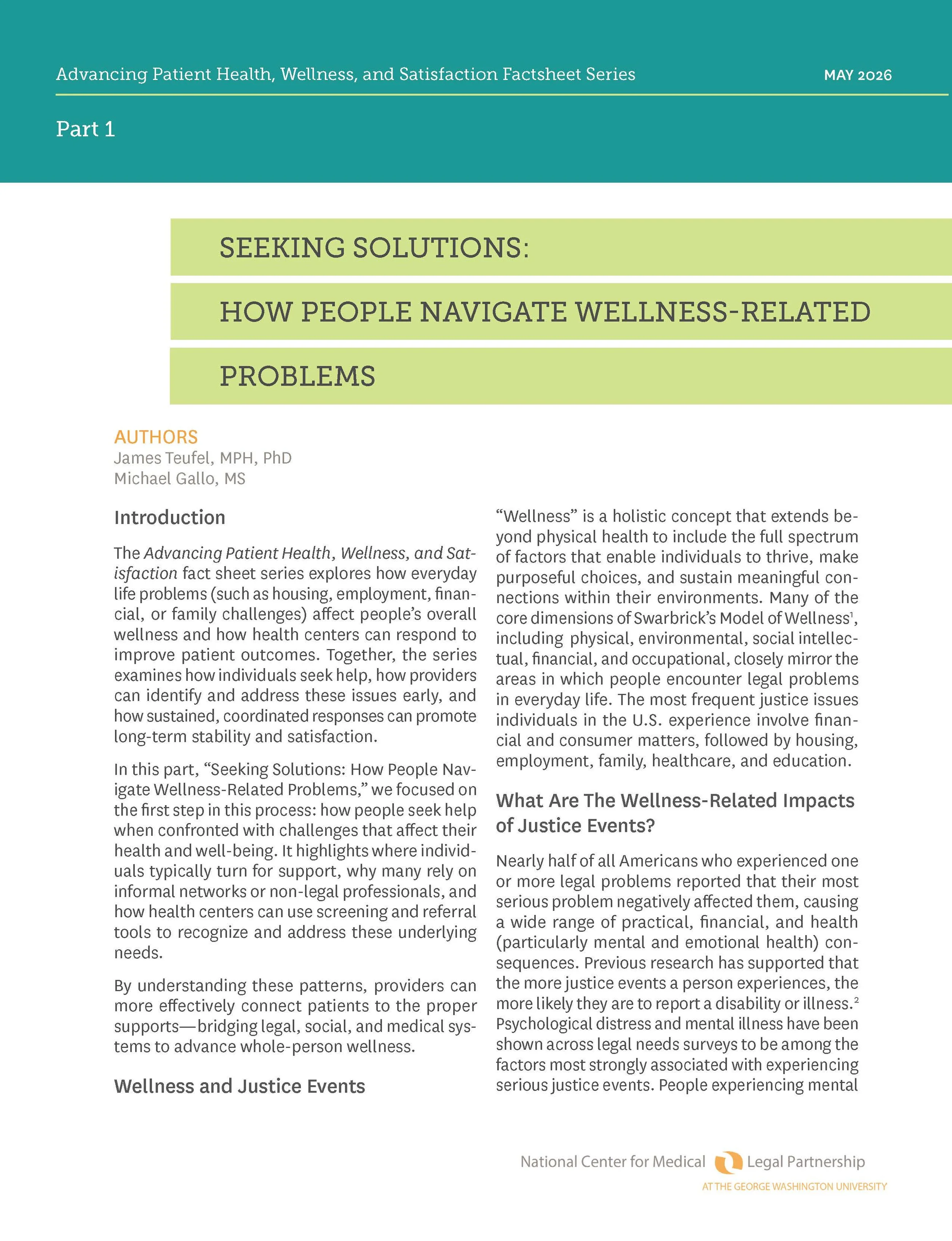
Advancing Patient Health, Wellness, and Satisfaction
This series of three (3) fact sheets from NCMLP explores how justiciable events shape individual and community wellness, and how health centers can respond with integrated, evidence-based approaches. Drawing on national research, the series examines how people navigate wellness-related problems — where they seek help, what drives their satisfaction with legal, medical, and mental health services, and how cross-disciplinary collaboration affects both patient and provider outcomes. Together, these resources equip health centers to strengthen community partnerships, improve screening and referral practices, reduce provider burnout, and implement sustainable, wellness-centered strategies that enhance quality, value, and outcomes.
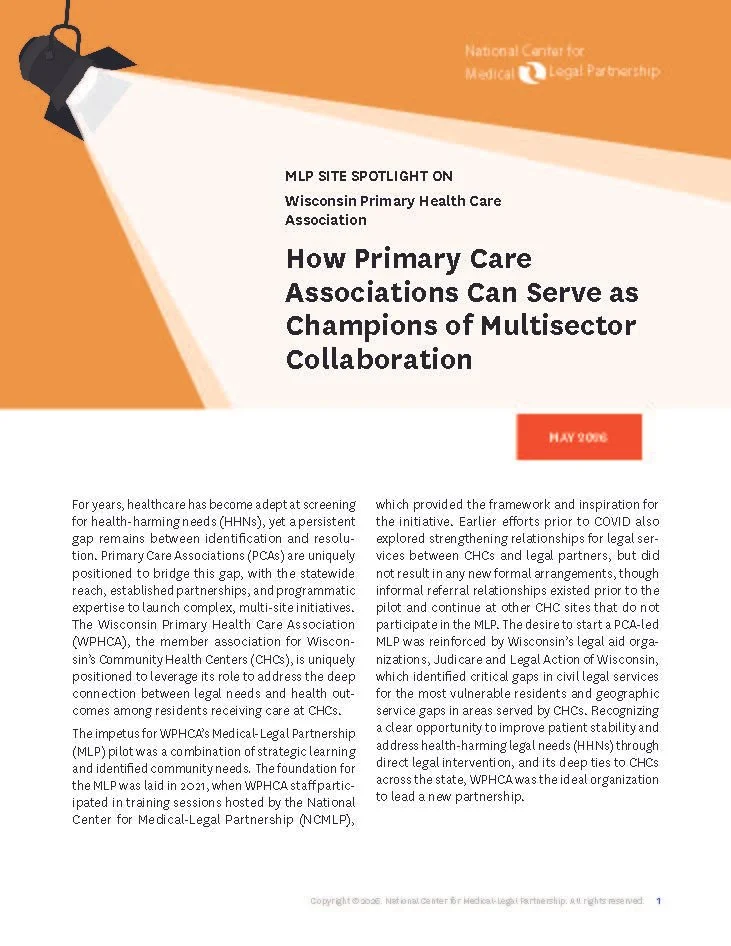
How Primary Care Associations Can Serve as Champions of Multisector Collaboration
This publication will highlight how primary care associations (PCAs) can play a leading role in the development and implementation of health center-based medical-legal partnerships (MLPs). The spotlight will also help health centers understand how the evidence-based MLP approach can support improvements in care quality and patient outcomes.
How Healthcare and Legal Partners Balance Survival and Innovation
This site profile explores how Legal Aid Services of Oklahoma is strengthening and adapting its medical-legal partnership model as the healthcare and legal landscapes evolve.
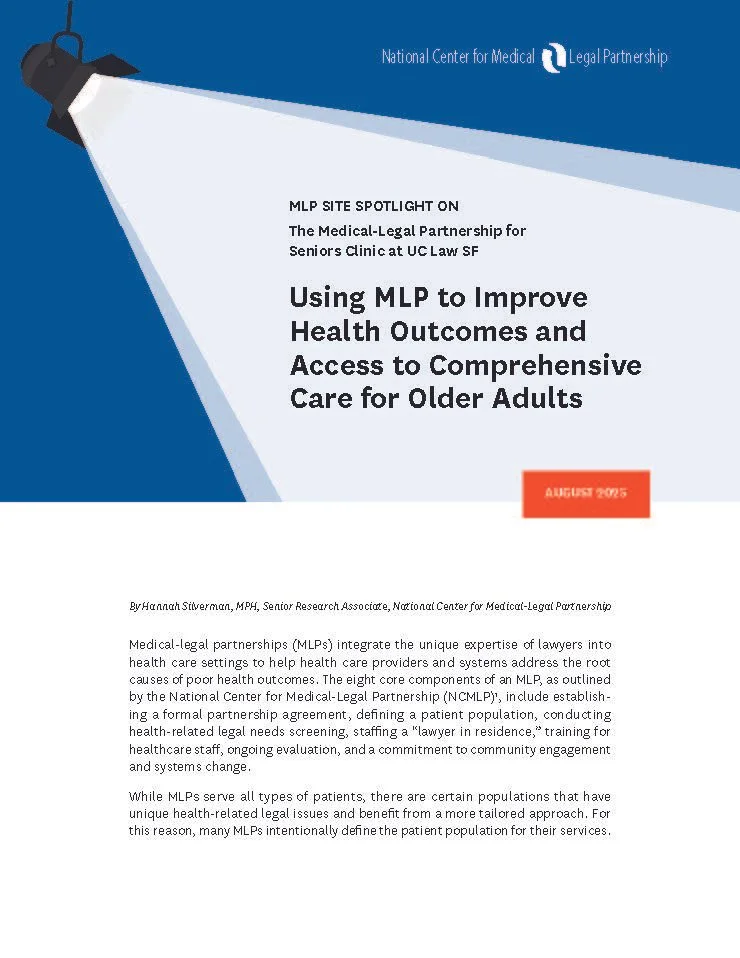
Using MLP to Improve Health Outcomes and Access to Comprehensive Care for Older Adults
This site profile features the work of the Medical-Legal Partnership for Seniors (MLPS) Clinic. MLPS provides comprehensive legal support to older adults in San Francisco who face complex, overlapping issues related to health, housing, income, and planning for future care. Led by Sarah Hooper, JD, the clinic serves a high-need population that is often socially isolated and at risk of institutionalization, with many living below the poverty line. This MLP also trains future healthcare and legal professionals to work collaboratively in addressing the unique legal needs of aging patients and their caregivers. The profile details how, through early screening, advanced care planning, and community partnerships, MLPS helps improve both the health and quality of life for older adults.
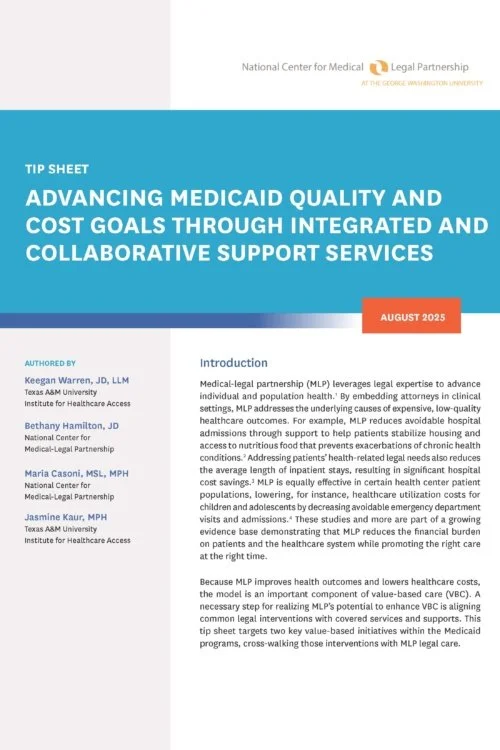
Advancing Medicaid Quality And Cost Goals Through Integrated And Collaborative Support Services
The National Center for Medical-Legal Partnership and Texas A&M’s Institute for Healthcare Access have released a new HRSA and Kaiser Permanente-supported tip sheet showing how MLP interventions can align with Medicaid to address patients’ health-related social needs. The resource offers strategies for integrating legal services into value-based care and highlights examples like North Carolina’s Healthy Opportunities Pilot.
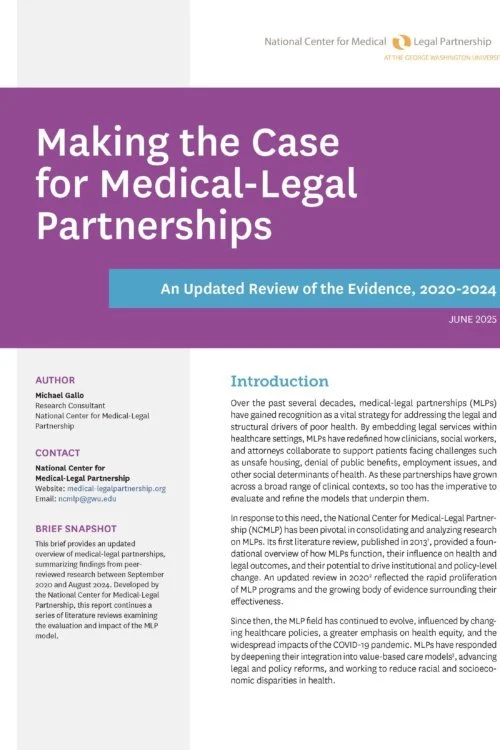
Making the Case for Medical-Legal Partnerships: A Review of the Evidence
The National Center for Medical-Legal Partnership has published three comprehensive literature reviews that offer an in-depth analysis of peer-reviewed research on medical-legal partnerships (MLPs). They capture the evolution and growing impact of MLPs across healthcare systems from 1977 - 2024.