
Resources
We publish research, tools, and lessons learned to help healthcare and legal organizations build and operate medical-legal partnerships and to help funders and policymakers advance medical-legal partnership activities. You can search those resources in the library below.
The library also links to journal articles, authored both by National Center for Medical-Legal Partnership staff and MLP practitioners and researchers from the field, that highlight ways medical-legal partnerships have improved patient health and well-being, the healthcare workforce, and healthcare delivery. A list of these articles with summaries are also available on the Peer-Reviewed Research page.
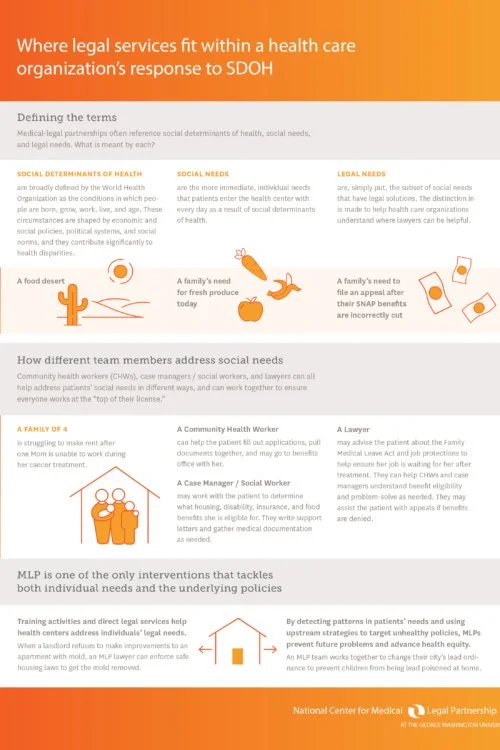
Where Legal Services Fit within a Healthcare Organization’s Response to SDOH
This infographic explains the difference between social determinants of health, social needs, and legal needs. It also demonstrates how different team members—community health workers, case managers / social workers, and lawyers—each help address patients’ social needs in different ways and where medical-legal partnership fits within a healthcare organization’s larger response to social determinants of health (SDOH).
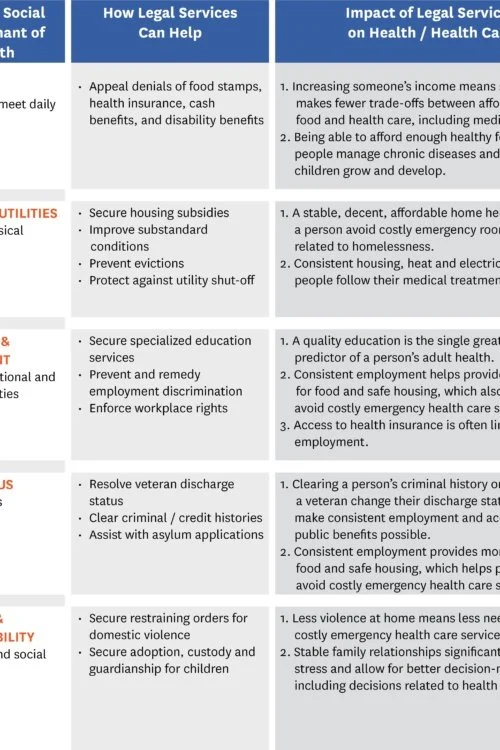
How Legal Services Help the Health Care System Address Social Needs: An I-HELP™ Messaging Chart
This chart shows some of the most common social problems faced by vulnerable communities, and how legal expertise and services can help mitigate their negative impact on health and health care. It can be used as a training tool and also to help communicate the value of an MLP. It is organized by the I-HELP™ acronym developed by the National Center for Medical-Legal Partnership to describe common health-related social and legal needs.
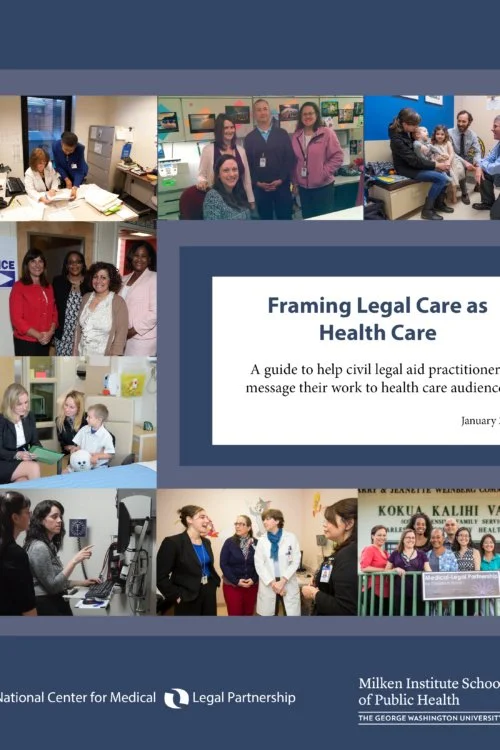
Framing Legal Care as Health Care Messaging Guide
The only way to make legal care visible and necessary to health care is to describe it in the words and values of that community. This guide helps civil legal aid practitioners message their work to healthcare audiences in order to build stronger cross sector medical-legal partnerships and to encourage investment in that work.