
Resources
We publish research, tools, and lessons learned to help healthcare and legal organizations build and operate medical-legal partnerships and to help funders and policymakers advance medical-legal partnership activities. You can search those resources in the library below.
The library also links to journal articles, authored both by National Center for Medical-Legal Partnership staff and MLP practitioners and researchers from the field, that highlight ways medical-legal partnerships have improved patient health and well-being, the healthcare workforce, and healthcare delivery. A list of these articles with summaries are also available on the Peer-Reviewed Research page.
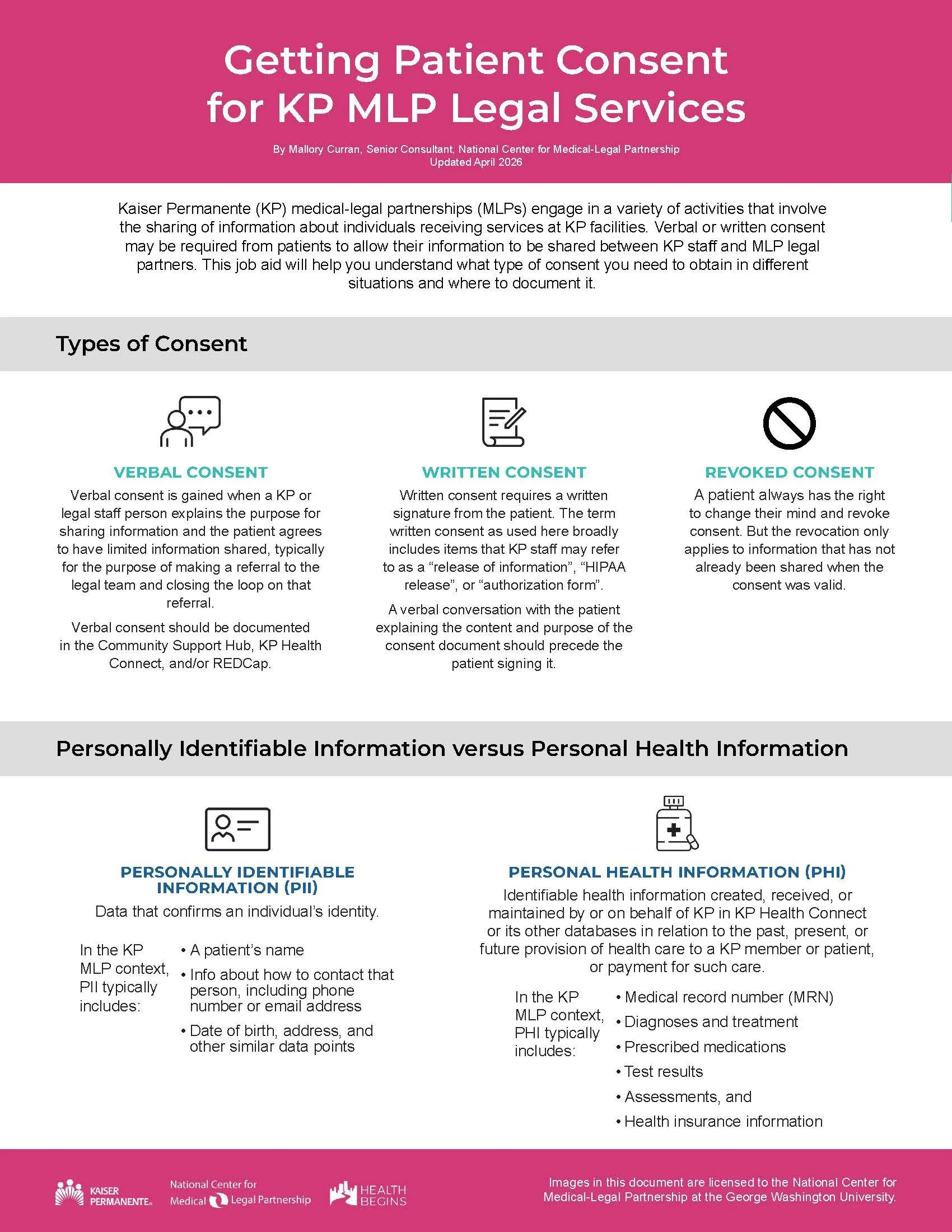
Getting Patient Consent for MLP Legal Services
This sample job aid can help front-line healthcare staff understand what type of consent they need to obtain in different legal services and medical-legal partnership situations and where to document it. It was created as part of the Kaiser Permanente (KP) Medical-Legal Partnership Initiative.
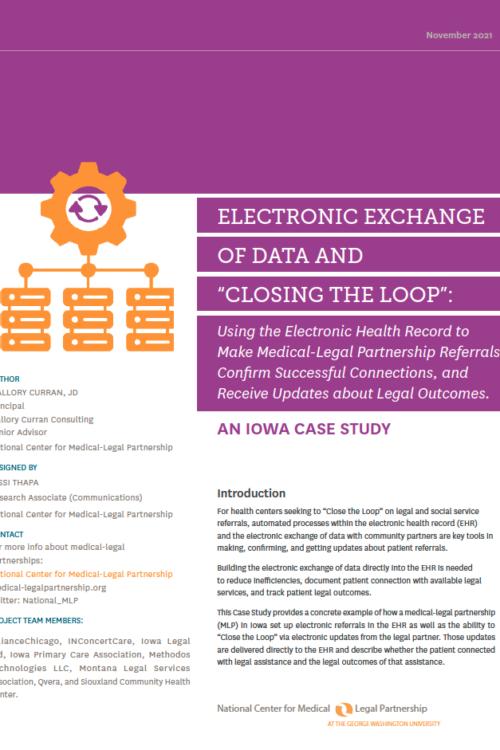
Electronic Exchange of Data and “Closing The Loop”: An Iowa Case Study
This case study provides a concrete example of how a medical-legal partnership (MLP) in Iowa set up electronic referrals in the electronic health record (EHR) as well as the ability to “close the loop” via electronic updates from the legal partner. Those updates are delivered directly to the EHR and describe whether the patient is connected with legal assistance and the legal outcomes of that assistance.

Leveraging the Electronic Health Record to Link Health Center Patients with MLP Services
This issue brief provides concrete examples of how health centers in Iowa, Montana, and Texas are leveraging the electronic health record (EHR) to complement their screening for the social determinants of health as well as to increase their capacity to deliver targeted medical-legal partnership-related interventions.
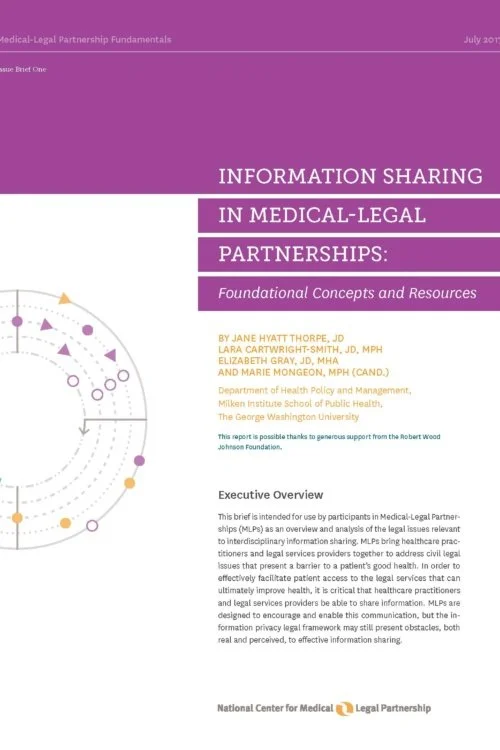
Information Sharing in Medical-Legal Partnerships: Foundational Concepts and Resources
In order to effectively facilitate patient access to the legal services that can ultimately improve health, it is critical that healthcare practitioners and legal service providers be able to share information. Medical-legal partnerships are designed to encourage and enable this communication, but the information privacy legal framework may still present obstacles, both real and perceived, to effective information sharing. This brief discusses numerous opportunities to share information within the boundaries of that legal framework and describes different consent models that are possible.